60 W CO2 Laser · Volume 5
Safety, Materials, and Reference
5.1 Treating the hazards honestly
A 60 watt CO2 laser is a genuinely dangerous machine, and the right response is neither fear nor bravado but respect grounded in understanding. It can blind, it can burn, it can start a fire, and — on the wrong material — it can fill a room with toxic, corrosive gas. Every one of those hazards is well understood and entirely manageable with the right habits and equipment, which is the point of this volume. It gathers the safety knowledge, the material do-and-do-not lists with the chemistry behind them, the alignment and cleaning routines, the consumables and their lifespans, and a specifications summary — with the owner’s specific build left as slots throughout.
5.2 Laser eye and skin safety
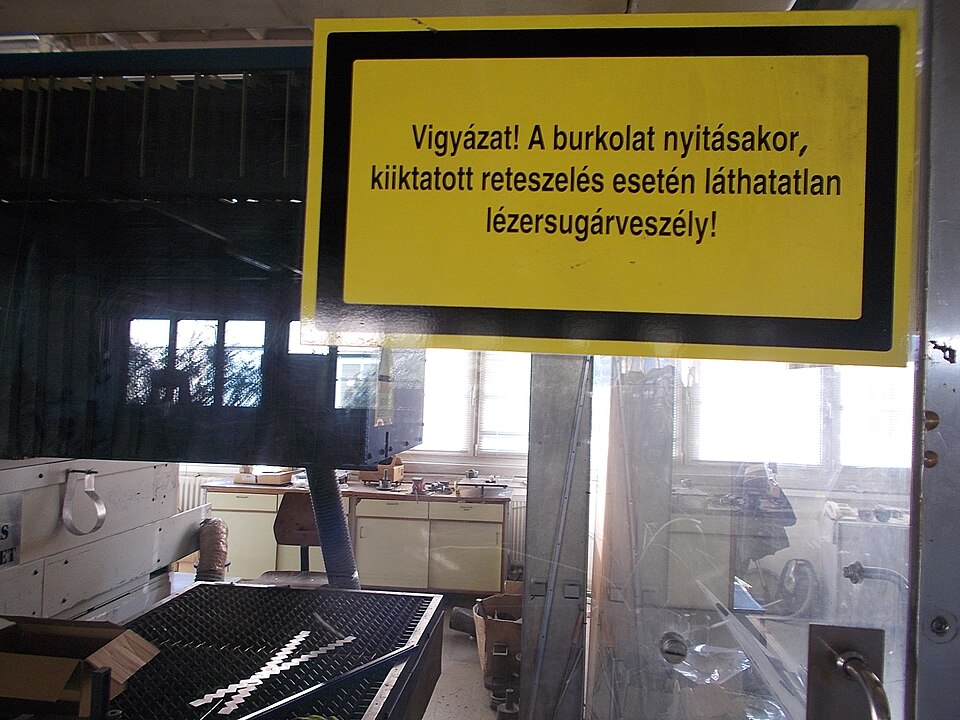
The CO2 beam is invisible infrared at 10.6 micrometres, and its invisibility is precisely what makes it dangerous: there is no visible flash to warn of a stray reflection, and the blink reflex that protects against bright light does nothing here. The same property that makes the beam cut wood and acrylic so well — organic material absorbs 10.6 micrometre light instantly at the surface — applies to the wet surface of an eye, where the beam is absorbed by the cornea and can cause a serious burn faster than a person can react. Skin, too, will burn under a direct or reflected beam.
The primary defence is the enclosure. A CO2 laser should be run as a sealed box, with a lid interlock that prevents the beam from firing whenever the lid is open (Volume 3). The cabinet’s window is made of material that blocks the 10.6 micrometre wavelength, so the operator can watch the cut without exposure. Because the enclosure is the main protection, the cardinal rule is simply: the beam only fires when the box is closed. For the times the enclosure is compromised — most of all during mirror alignment, when the operator deliberately fires low-power pulses with the lid up — appropriate CO2 laser safety glasses, rated for 10.6 micrometres, are worn, and even then alignment is done at the lowest usable power with great care never to place a hand or eye in the beam’s path. It is worth noting that CO2-specific eyewear is different from the tinted glasses used with the shop’s visible-light diode laser; the two are not interchangeable, because they block different wavelengths.
5.3 Fire safety
Cutting with a laser is burning, and fire is the most likely serious incident on any laser. The beam ignites the material by design; the job of the operator and the machine is to keep that a controlled burn rather than a spreading one. Several habits and systems work together. Air assist (Volume 3) blows out the small flames that constantly try to establish at the cut, and is as much a fire-prevention tool as a quality one. Exhaust removes the smoke and, with it, some of the heat. Keeping the bed and the debris tray clean of accumulated cut-offs and scorched residue removes the fuel that turns a flare into a fire. Certain materials are far more prone to flaming than others — thick acrylic and oily or resinous woods in particular — and warrant extra attention.
Above all of these stands one rule that admits no exception: never leave the laser running unattended. A cut that has run cleanly a hundred times can flare on the hundred-and-first because of a knot in the wood, a focus error, or a scrap left on the bed, and the only reliable protection is an operator watching, with a hand ready to stop the job. A fire extinguisher — a CO2 or a clean-agent type suited to electrical and material fires — belongs within arm’s reach of the machine, and a small burn that the air assist cannot knock down is a reason to stop the job, open the lid, and deal with it immediately rather than hoping it burns out.
5.4 Material safety: the OK list and the DO-NOT list
Material choice is where quality preference becomes life safety, because some materials release genuinely toxic and corrosive gases under the beam. The rule that governs everything is: know what the material is before it goes on the bed. An unlabelled sheet of unknown plastic is not a candidate for “let’s try it”; it is a candidate for the bin.
The generally safe materials are the natural and well-behaved synthetics: cast and extruded acrylic (PMMA), which cuts beautifully with a flame-polished edge; plywood, MDF, and solid hardwood, the staples of model-shop work; paper, card, and cardboard; genuine leather (vegetable-tanned, not the vinyl “faux leather” that masquerades as it); cork, natural felt, and bamboo; laser-grade rubber for stamps; and — for marking only, not cutting — anodised aluminium and metals prepared with a marking spray, along with slate and glass for etching. Even these safe materials still demand full exhaust, air assist, and a fire watch, and still demand knowing the stock is what it claims to be.
The NEVER list is short, specific, and non-negotiable:
- PVC, vinyl, and vinyl-based “faux leather.” This is the headline prohibition. Under the beam, PVC and other chlorinated plastics release chlorine gas and hydrogen chloride; the hydrogen chloride reacts with moisture — in the air, and in the operator’s throat and lungs — to form hydrochloric acid. It is acutely toxic to breathe, and it corrodes the machine from the inside: the acid attacks the optics, the metal rails and bearings, and the exhaust ducting, leaving rust and etched lenses behind. There is no safe way to cut PVC on this or any laser.
- Any other chlorinated plastic (PVDC and similar) — same chlorine chemistry, same hazard.
- Polycarbonate (Lexan). It absorbs 10.6 micrometre light poorly, so it cuts badly; it yellows, flames, and releases unpleasant fumes. A poor material that is also a fire risk.
- ABS, HDPE, and polystyrene foams — these melt and catch fire rather than cut cleanly, and can release hazardous fumes; fibreglass and carbon-fibre composites release resin fumes and abrasive dust.
- Bare and reflective metals. A 60 watt CO2 laser cannot cut them, and a polished metal surface can reflect the beam unpredictably — a hazard as well as a waste of time. Metal work on this machine is limited to marking prepared or coated surfaces.
- Any unidentified plastic or foam. If it cannot be identified with confidence, it does not go on the bed.
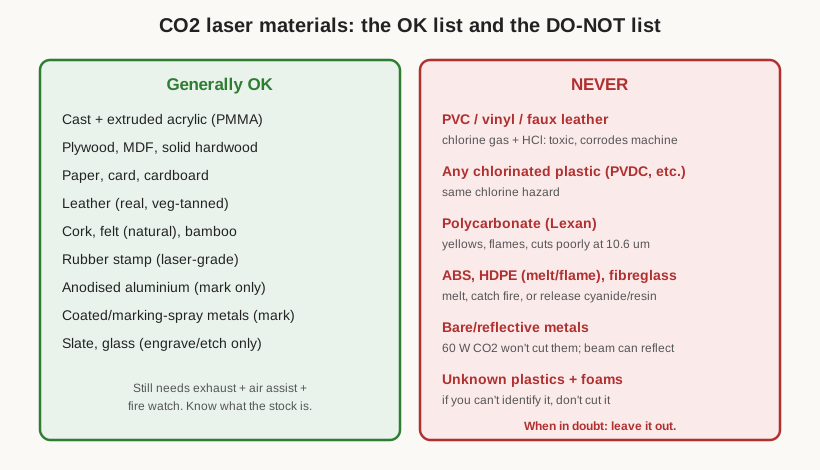
The unifying principle is worth stating plainly: when in doubt, leave it out. The cost of not cutting a questionable material is a mild inconvenience; the cost of cutting PVC is a poisoned lungful of acid and a corroded machine.
5.5 Mirror and lens alignment and cleaning
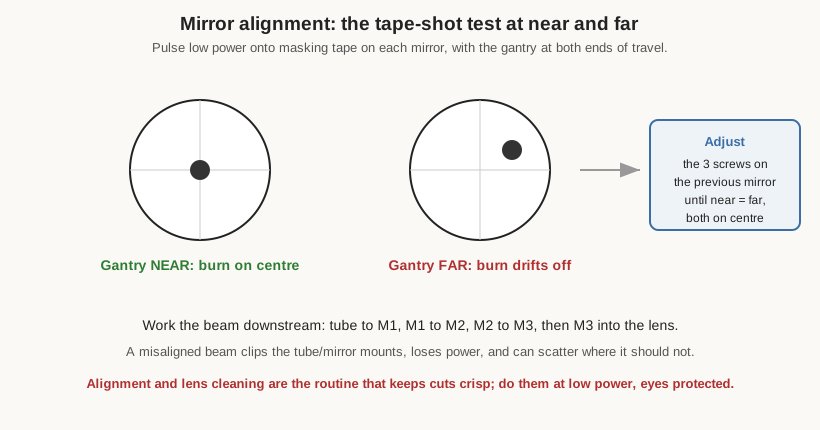
The flying-optics beam path (Volume 2) only works when the three mirrors are precisely aimed, and keeping them so is the core maintenance ritual of a CO2 laser. Alignment is checked and corrected with the classic tape-shot method: a piece of masking tape is placed over a mirror, the laser is pulsed at low power, and the small burn mark shows where the beam is landing. The test is repeated with the gantry and head at both the near and far ends of their travel; if the burn mark stays centred at both extremes, the beam is parallel and the alignment is good. If it drifts between near and far, the three adjustment screws on the previous mirror are tweaked until it does not. The process works downstream: tube to Mirror 1, Mirror 1 to Mirror 2, Mirror 2 to Mirror 3, and finally Mirror 3 squarely into the lens. Alignment is always done at the lowest usable power, with CO2-rated eyewear, and with great care about where the pulsed beam can go.
Cleaning is the quieter half of optical maintenance. Smoke, spatter, and dust settle on the mirrors and especially the lens; any deposit absorbs the beam, heats up, robs the cut of power, and — left long enough — permanently damages the optic. The lens and mirrors are cleaned gently with appropriate lens tissue and solvent, handling the fragile coated surfaces with care, on a schedule that matches how hard the machine is worked. A clean, aligned optical train is the difference between crisp full-power cuts and a machine that mysteriously “loses power.”
5.6 Tube life, consumables, and maintenance rhythm
The sealed glass tube is the machine’s principal consumable. Because the gas cannot be replenished, output slowly fades over the tube’s life and eventually falls off entirely. Manufacturer figures for tubes of this class commonly cite lifespans in the range of roughly 2,000 hours and upward — often 4,000 hours or more — but those numbers assume the tube is treated well: run within its rated current rather than pushed to maximum, kept in a stable temperature window, and always properly cooled. Running a tube hard and hot to squeeze out extra power is a false economy that trades tube life for marginal speed. An ammeter on the panel (a common upgrade) lets the operator see the tube current directly and keep it within its rated ceiling.
Other consumables and their care round out the maintenance rhythm. The lens and mirrors are cleaned regularly and replaced when damaged. The coolant is kept clean — distilled water, changed periodically before it grows algae or picks up deposits. The air-assist and exhaust filters or traps are cleaned or replaced on schedule. The belts and rails are checked for tension and wear and kept clean of debris. None of this is onerous, and all of it is far cheaper than the failures it prevents: a cracked tube from lost cooling, a ruined lens from soot, a fire from a debris-choked bed.
5.7 Specifications summary and further reading
The machine, in reference form, is a large-format Chinese CO2 laser cutter/engraver, approximately 60 watts, with a sealed DC-excited glass CO2 tube (roughly 1.2 to 1.25 metres long, output at 10.6 micrometres), a flying-optics beam path of three mirrors and a focusing lens delivering the beam to a moving head over a large bed, stepper-driven X/Y motion, and the full complement of support systems: water cooling (chiller or reservoir), air assist, exhaust/fume extraction, and electrical interlocks. It is heavily modified and mounted on a homemade cart. The exact figures below are owner-specific and left as slots rather than invented:
- Tube: exact wattage, length, brand, and installed date — owner slot.
- Controller: stock M2Nano/Moshidraw or upgraded Ruida DSP, and LightBurn status — owner slot.
- Bed / working area dimensions and Z travel — owner slot.
- Cooling: chiller model or reservoir arrangement — owner slot.
- Air assist, exhaust blower, and interlock details — owner slot.
- The specific modifications and the cart build — owner slot.
For further reading, the most useful sources are the ones this deep dive was checked against: the LightBurn documentation for software and controller setup; vendor material from Cloudray, OMTech, and the generic Chinese-laser sellers for tubes, LPSUs, chillers, and Ruida controllers; the RDWorks/Ruida controller references; the laser-community forums (the LightBurn forum, Maker Forums lasers section, and r/lasercutting) for real-world alignment, upgrade, and troubleshooting experience; and any reputable laser-safety guidance on materials and fume hazards. The recurring lesson across all of them matches the one these volumes have tried to convey: a large-format CO2 laser is a superb tool for a maker who runs it as a system, respects its hazards, knows its materials, and keeps it clean, cool, aligned, and watched.
Comments (0)